
 Posted by
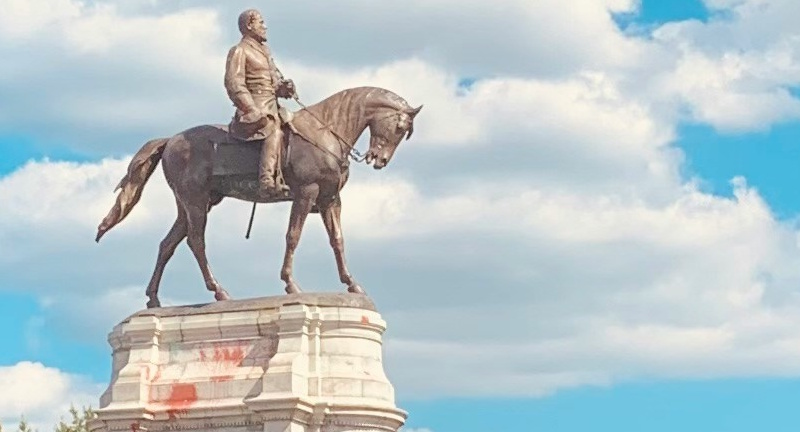
Some want to tear down Confederate Soldier Memorials because they see them as a glorification of Slavery. Others want to keep them in place because they see them as monuments that honor their fallen ancesters. Both may have a point. This brief essay tries to assess how these two conflicting views hold up in a global comparison.

Confederate Memorial in Edenton, NC
Mao Tse Dung
Mao Tse Dung’s regime killed about 70 million people and enslaved about 20 million, mostly Chinese.
Today, approximately 3,000 Mao memorials exist worldwide, most of them in China, but there are also Mao monuments in Nepal, Peru, and Albania as well as in London, Los Angeles, San Diego, Montreal, Vancouver, and Sidney, Australia. A summary can be found in Cheng Wenjun’s book on Mao Statues. (图解毛泽东雕塑 ISBN-10: 7503324163 and ISBN-13: 978-7503324161, published by the People’s Liberation Army and Art Publishing House, 2013).

Mao Tse Dung Monument in China
Genghis Khan
The Mongols under Genghis Khan and his successors killed approximately 40 million people – nearly 10% of the world population at the time – and they enslaved an estimated 5-8 million people.
Today, there are many Genghis Khan monuments in Mongolia. Almost every provincial capital has one. There are several also in Kazakhstan, China, and Russia and one even in London’s Hyde Park, erected in 2012.

Gigantic Genghis Khan Monument in Ulan Bator
Lenin
Lenin’s regime killed about 10-12 million people and enslaved hundreds of thousands.
Today, there are an estimated 10-12,000 Lenin memorials world wide, about 80% of them in the Russian Federation. There is a Lenin memorial in Seattle, showing Lenin in a dynamic revolutionary pose. There are two Lenin memorials in Germany, one in Gelsenkirchen and one in Berlin. Another one is in Cavriago, Italy. Yet another Lenin bust is located in Gullspång, Sweden and one is located at an abandoned Soviet research station in Antarctica.

Largest Lenin Monument in Russia
Stalin
Stalin’s regime killed approximately 20 million people and enslaved about 32 million.
Today, there are approximately 140 Stalin memorials worldwide. 110 of them are in Russia. 95 were newly erected under Putin since 2000. There is a Stalin memorial in Bedford, Virginia. One is in Vienna, Austria, and one in Berlin, Germany.

New Stalin Monument in Moscow
The Romans
The Roman empire killed approx. 40 million and enslaved an estimated 20 million people around the Mediterranean and in Northwestern Europe.
Today, there are still thousands of Roman monuments all over Europe that memorialize and celebrate Roman dominion and rule over more than 70 ethnic groups or nations. Roman rule is still very present in Western Europe today. Yet, nobody in Europe has ever publicly demanded that Roman triumphal monuments or the remains of Roman military installations should be removed because they are perceived as glorifying the enslavement of German tribes. Today, “cheers” in German is still “Prost!”, which is short for the Roman (Latin) “Prosit” = “may it be useful”.

France and Germany
The Germans attacked France three times in modern history: 1871, 1914, and 1939. In these three wars, the Germans killed approximately 2.2 million French soldiers and civilians.
Roughly 1 million German soldiers are today buried in France in seven cemeteries and the French maintain these cemeteries. There has never been a public voice in France demanding that these cemeteries, some of which also hold graves of SS officers, should be closed, because they are perceived as glorifying military aggression or Nazi totalitarianism.
About 6 million non-French Europeans died in the Napoleonic wars. Today, millions of European tourists visit Napoleon’s Memorial Tomb in the Dôme des Invalides in Paris every year and the bridges across the river Seine are still named after Napoleon’s victories.


Nazi Germany
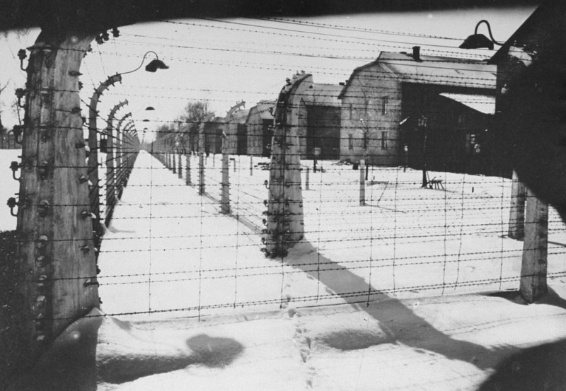
The following eleven Nazi Concentration Camps still exist in Europe as memorials of irrational racism and brutal genocide:
Auschwitz,
Majdanek,
Dachau,
Buchenwald,
Sachsenhausen,
Mauthausen,
Bergen-Belsen,
Treblinka,
Sobibór,
Belzek,
Chelmno.
These places do not glorify the Holocaust. I have visited some of them and they make your blood freeze. They remind people of the dark side of human nature and express hope that such atrocities will never be repeated.
Latin America
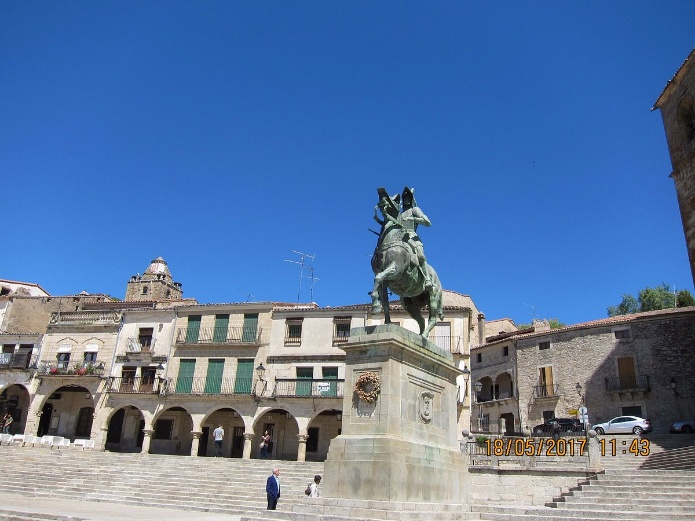
Today, all over Latin America, there are still thousands of memorials for the Spanish and Portuguese conquerors. Some have been removed, but some have been re-erected. Cortés, Pizarro, Balboa, de Soto, Ponce de León, da Gama, Cabral, Albuquerque. There are thousands of memorials for them and streets and places are named after them all through Latin America. Many Latin-Americans are actually proud of their Spanish or Portuguese heritage. In Colombia, where I lived and worked for some time, people refer to the Spanish language as “nuestra lengua Castillana” – “our Castilian language”. Castile is of course the Spanish region that resisted Islamic occupation and started the re-conquest of Spain.
George Floyd
George Floyd was arrested and charged for nine incidents between 1997 and 2007, mostly drug possession+delivery and theft, resulting in several convictions and jail sentences. His most serious conviction was for a 2007 home invasion and robbery. He impersonated a water department worker and held a pistol to a woman’s abdomen while searching for loot. He was charged with aggravated robbery with a deadly weapon, pleaded guilty in 2009 in a plea bargain deal, and was sentenced to five years in prison. After four years, he was paroled in 2013. On the day of his death Floyd was arrested for using counterfeit money to buy cigarettes. Reports remain unclear about whether or not he knew the money was counterfeit. He died when police officer Derek Chauvin knelt on his neck for nine minutes. Chauvin was convicted of second degree unintentional murder, third degree murder, and second degree manslaughter. He received 22.5 years in prison.
Do Chauvin’s wrongdoings negate Floyd’s wrongdoings? Do they make Floyd a better person? I do not think so. Yet, there are currently at least four Floyd memorials in the USA: in Newark, New Jersey, in New York City, in Charleston South Carolina, and in the George Floyd Square in Minneapolis, Minnesota. Advocates of these monuments see them as mementos against racist police brutality. Opponents see them as glorifications of a low-life drug criminal.

Slavery and the Civil War
There are many memorials worldwide for arguably bad actors and bad actions, some definitely worse than the enslavement of black people from Africa in America.
Although Confederate Vice President Alexander H. Stephens proclaimed in his famous speech in 1861 that the preservation of slavery was the “cornerstone” of the Confederate States for their secession, slavery was clearly only one aspect of the Civil War, not its sole motive or cause.
At least not for the Union. In a letter to Horace Greeley, Abraham Lincoln wrote on August 22, 1862:
“My paramount object in this struggle is to save the Union, and is not either to save or to destroy slavery. If I could save the Union without freeing any slave I would do it, and if I could save it by freeing all the slaves I would do it; and if I could save it by freeing some and leaving others alone I would also do that. What I do about slavery, and the colored race, I do because I believe it helps to save the Union.” (Super Grok 4, punctuation and orthography as in the original.)
There are several similar statements from Lincoln. Should we tear down all Lincoln memorials?
Slavery as a Global Phenomenon
Slavery is bad. Period. No ifs or buts. Yet, those who seem to treat it as an exclusively American phenomenon, are patently wrong. The institution of slavery in its many variants has prevailed for millennia and black Africans have not been its only victims. In fact when we look at the world history of slavery, it becomes obvious that black people have not only been a minority among enslaved humans but that they were also often the enslavers. Africa is often described euphemistically as a land where all black Africans lived free. Unfortunately, this picture does not show the historic facts.
Slavery in Africa
For millennia, slavery has been a worldwide phenomenon and black people were not always the slaves but often the slave holders, the slave raiders, and the slave traders. In Africa, slavery was endemic. Both slaves and slave holders were mostly black. To my best knowledge, all subsaharan African kingdoms were slave states: Ghana, Mali, Songhai, Kanem Bornu, Oyo, Benin, Ashanti, Dahomey, the Wolof Empire, Aksum, the Swahili City States, Buganda, the Bunyor Kitara Empire, the Luba Kingdom in the Kongo, the Lunda Empire, the Kuba Kingdom, the Ndongo Kingdom, the Ma-pun-gub-we Kingdom, and the Kingdoms of Zimbabwe, Monomutapa, Rozvi, Zulu, and Swazi.
However, the premier slave holding and slave trading states in subsaharan Africa between 800 and 1600 AD were the West-African kingdoms of Songhai and Mali. In 1325, Mansa Musa, the ruler of Timbuktu and probably the richest man who ever lived, had over 20,000 personal slaves in his entourage during his hadj to Mecca, many of them Europeans, who had been caught by Muslim pirates in the Mediterranean.
Islam greatly boosted slavery and slave trade across the Sahara. Islamic slave traders had controlled the trans-Saharan slave trade for over 800 years before Columbus ever set foot on America in 1492. The West African chiefs conducted most of the slave raids and sold their own fellow countrymen to the European and Arab slave traders. And make no mistake: the trans-Saharan slave trade still exists today.
Pre-Columbian America
Almost all of the North American cultures had slaves. In North America, approx. 500 different Indian languages existed. In Mesoamerica approx. 125 Indian languages existed and in South America about 600. These languages were all very different from each other, which made communication between language groups difficult. The result was never-ending tribal warfare, which produced a never-ending stream of captives who then became slaves – if they were lucky. If they were not so lucky, they would be sacrificed to the gods.
In North America, the Kwakiutl, Kwakawaka, Salish, Comanche, Yurok, Klamath, Pawnee, Creek, Muscogee all had slaves. The Cherokee, Chickasaw, Choctaw, Creek, and Seminole did not originally have slaves but adopted slavery when Africans were brought to America. The Inca, Moche, Aztec, Olmeca, Mishteka, Mazateca, and Maya empires all had extremely brutal forms of slavery.

European Chattel Serfdom
All over Europe in the Middle Ages chattel slavery was a common institution. It existed in the Holy Roman Empire of a German Nation, in Prussia, Austria, Bavaria etc. In Prussia, German chattel slavery (called Leibeigenschaft) was only abolished on March 31, 1850 – just 13 years before the Emancipation Proclamation. It was abolished in England at the end of the 16th century, in France in 1789, in Denmark in 1788, in Austria and Hungary in 1782, in Bavaria in 1808, in Poland and Russia in 1864 – one year after the Emancipation Proclamation. And nota bene: that was Europeans enslaving Europeans.
Conclusions:
Slavery of Africans in North America was a relatively brief episode in the history of mankind. It was always considered wrong by many white people, who themselves were often also enslaved. White Americans fought over slavery and more than half a million of them died in the conflict. I know of no other nation that fought a bloody war to abolish slavery.
Through the millennia, people fought, killed, and died for what they believed in or valued most. As we all know, the history books are written by the victors. Later generations and their historians, judging by their own values, often disagreed. Values change. What will coming generations think about the values we hold today?
The Romans had a moral principle concerning the dead: “De mortuis nihil nisi bene.” In modern speak: “Honor the dead regardless of how they lived, what they believed in, or what they fought or died for.” It seems to me that the examples I have presented so far show convincingly that today most peoples and nations accept this moral principle. I therefore plead that we should also apply it to the fallen Confederate soldiers, most of whom did not have slaves. They fought for Southern Independence, not for the preservation of slavery. They died for what they believed in, and we should honor their final sacrifice even if we do not share their values.
As I see it, Confederate soldier memorials do not glorify slavery. They simply honor the dead. Nothing more and nothing less. It’s not even a political issue. Just one of human decency. Even African folklore acknowledges this: