Brown Bomber vs Nazi Superman – a lesson in humanity

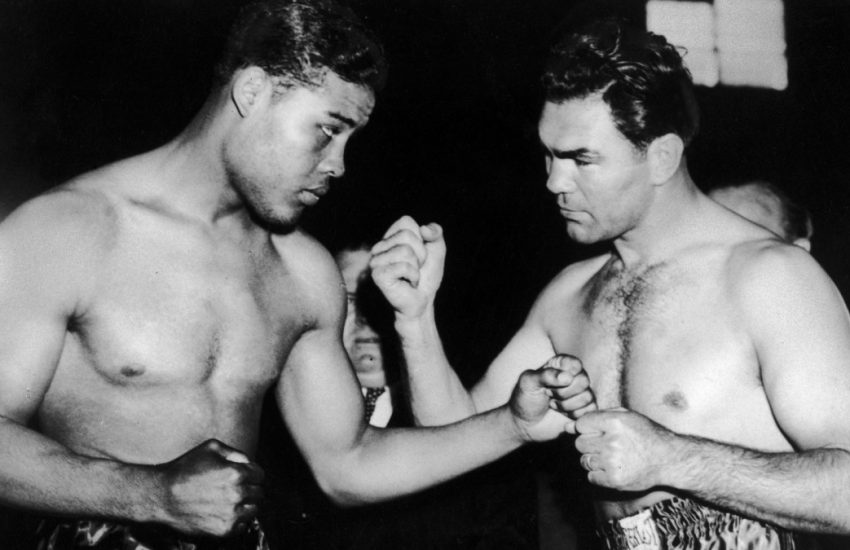
Both Louis and Schmeling became political figures when the Nazis came to power in Germany. Hitler tried to placate Schmeling as proof of the superiority of the Arian race, while Joe Louis was seen, by black and white Americans alike at the time, as the litmus test that a democracy was better than fascism.

On June 19, 1936, Joe Louis and Max Schmeling faced off against each other in New York’s Madison Square Garden. The fight had to be postponed for a day due to bad weather and the New York Times wrote: “Schmeling’s execution was delayed.”

Continue reading

Putin is right — right full of it

Recently, I have been involved in repeated discussions about whether or not Russia (Putin) is justified in invading Ukraine. The main arguments (mostly propagated by Tik Tok, CTV, and RTV for obvious reasons) why Russia’s war of aggression against Ukraine is justified are. . .
The Ukrainians are actually Russians and they speak a Russian dialect!

The Ukrainian government is corrupt!

Putin is fighting globalism!

Below, I will discuss the validity or lack thereof of these arguments.

Continue reading

How the means can discredit the ends

Napoleon Bonaparte was certainly a very intelligent, creative, and energetic personality, a great statesman, and an ingenious military leader. He did much good for many people in Europe. My wife’s grandma Anna grew up in a part of Germany that later became the “Département Ruhr”, the administrative unit of the Eastern Ruhr region under French occupation from 1806 through 1813. Anna and all her siblings never learned much of anything until the French came. They started a public-school system and taught all children to read and write – French, of course.

Napoleon also personally participated in writing a new civil code for France, which was a huge step toward civil liberty and public safety. His “Code Napoleon” is still today France’s civil law. It also became the model for the civil code of many other nations. And it is still amazingly “modern” today.

Continue reading

White Men Can Pack

When I lived with the Yebámasa Indians on the Río Piraparaná in South-East Colombia in 1977/78, one day, a group of Indians from Síoro Jáiro, a place directly on the Piraparaná consisting of four palm-leaf malocas, decided that they wanted to travel to the mission town of Mitú by canoe. Mitú was approximately 300 miles by river from Síoro Jáiro.

Continue reading

The Meaning of Colors

Colors have always been used as symbols. And their symbolism differs from culture to culture. They can carry social, political, and religious messages. And since the messages differ from culture to culture, knowledge of culture-specific color symbolism plays an important role in global marketing and communication between people with different cultural backgrounds. Let’s check into the meaning of some of the main colors.

Continue reading

Slavery

As a general concept, ‘slavery’ can be defined as the ‘ownership and/or complete control of one person by another person or by an institution or organization and the near complete loss of personal liberty and decision-making power by the enslaved person’.
Contrary to what many people think, slavery was not only endured by black people (sub-Saharan Africans) in America. And Africans were not only the victims. Black people, in particular West African governments, were instrumental in hunting down their own and selling them to the Arabian and European slave traders.

Continue reading

Terms and Concepts as Weapons of Culture War

Legend tells that Kung Fu Tse, the great Chinese philosopher and administrator, when he was once asked what he would do first if he could become the emperor of China, replied: “I would define the concepts.” Kung Fu Tse understood that if you want to control how people act, you must control how people think. If you want to control how people think, you must control how they speak. And if you want to control how people speak, you must control language, i.e. the meaning of terms and of the concepts they refer to.

Continue reading

Reverse Anthropology

By mid-April of 1977, I arrived by STOL aircraft on a piece of savanna in the middle of the tropical rain forest that was part of the Comisaría del Vaupés. From the “air strip” it was about a two-hour march through the teeming rain forest to get to the small settlement of Yebámasa Indians, I had selected as my study group. Of course, the Indians did not know that, and my sudden arrival was a surprise for them.

Continue reading